
One Eyed Jack - The Bravery of WW1 Pilots
The Jack of hearts was historically depicted as a brave knight, riding a horse with a lance. Often showcased battling a foe, the card signified bravery, paired with youthful exuberance.
Kevin Bockius
1/25/20262 min read
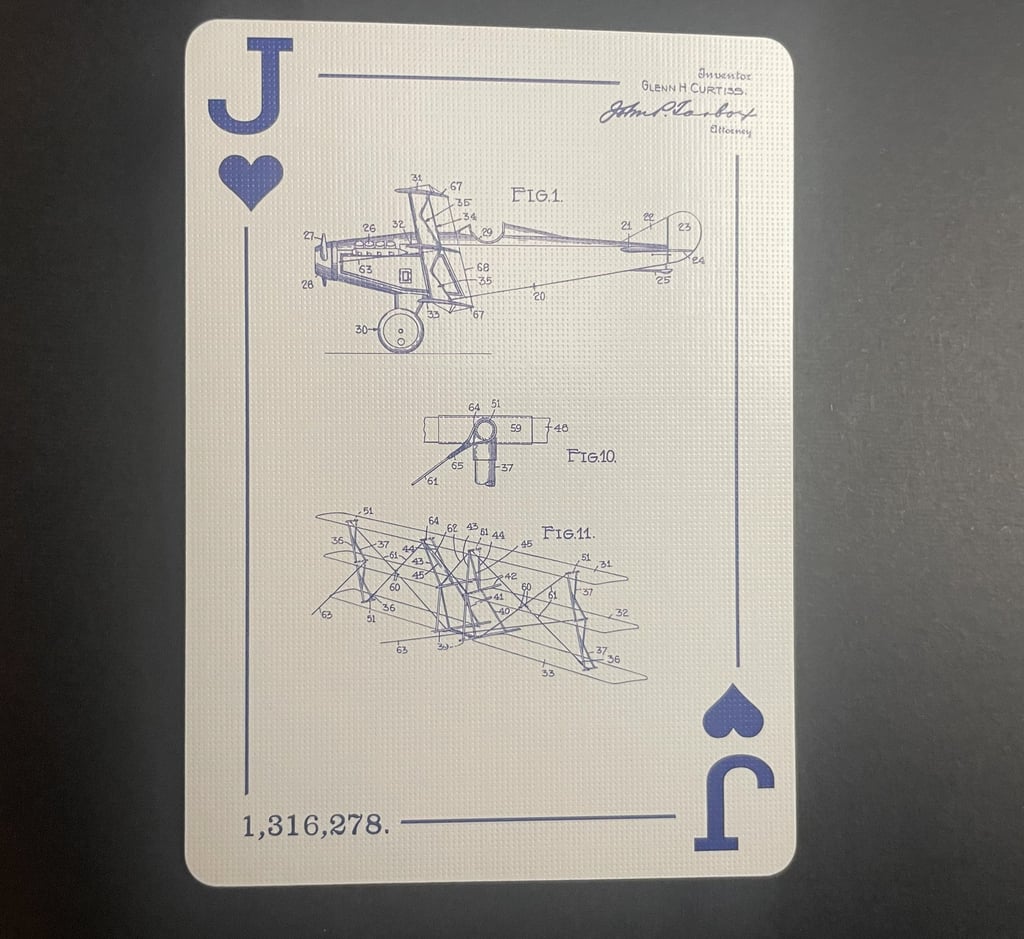
The Jack of Hearts has long been portrayed as a bold young knight, lance in hand, charging into danger. In early German card art, he’s often shown mid‑battle, embodying bravery and youthful exuberance. These exact qualities are what a WWI triplane pilot needed to survive the skies.
Few pilots captured that spirit better than Raymond Collishaw, the Canadian ace who led the legendary “Black Flight.”. Flying the British Sopwith Triplane, Collishaw and his small squadron recorded 34 aerial victories, often facing overwhelming odds. It wasn’t uncommon for five Sopwiths to take on twenty or more German fighters, relying on instinct, teamwork, and sheer nerve to come out alive.
The triplane’s engineering made these feats possible. Its three‑wing configuration delivered tight turning ability, high lift at any speeds, and remarkable vertical agility—perfect for high‑risk, high‑skill maneuvers. But those extra wings came at a cost: drag. Because drag increases with the square of velocity, the Sopwith topped out around 117 mph . As engines grew stronger and aircraft design evolved, the need for triple wings faded. Many newer generation fighters were far faster.
Despite this, the Sopwith stayed somewhat competitive. Experienced pilots could take advantage of the agility and high climb rate to terrorize or evade enemy squadrons. The Sopwith was eventually phased out due to its difficulty being repaired (The Vintage Aviator) and inferiority to newer aircraft.
Yet the spirit of the one‑eyed Jack lives on in the daring pilots who mastered these machines. US Patent US1316278A, featured in The Engineer’s Deck, is a rare example of an American triplane design that improved upon earlier triplane iterations. For example, the narrow chord design of each wing (showcased nicely in the Jack of Diamonds) enabled less wing bracing (and weight) while keeping structural integrity. This, along with a more compact fuselage, greatly reduced the plane's total drag. This design never saw widespread use.
While the triplane may have vanished from the front lines, the courage and bravery of their pilots continues to be known to this day. The one-eyed Jack embodies this sentiment - bold, exuberant, and everlasting.
KboxCo Playing Cards
Questions? Concerns? Reach us at kboxcalendars@gmail.com
© 2026. All rights reserved.