
The Kings of Engineering: Why Fasteners Rule the Built World
A well deserved tribute to the quiet, unglamorous components that hold our entire engineered world together. Each King card features a different fastener: bolts, screws, etc - the hardware that rarely gets celebrated but absolutely deserves the crown.
Kevin Bockius
4/9/20262 min read
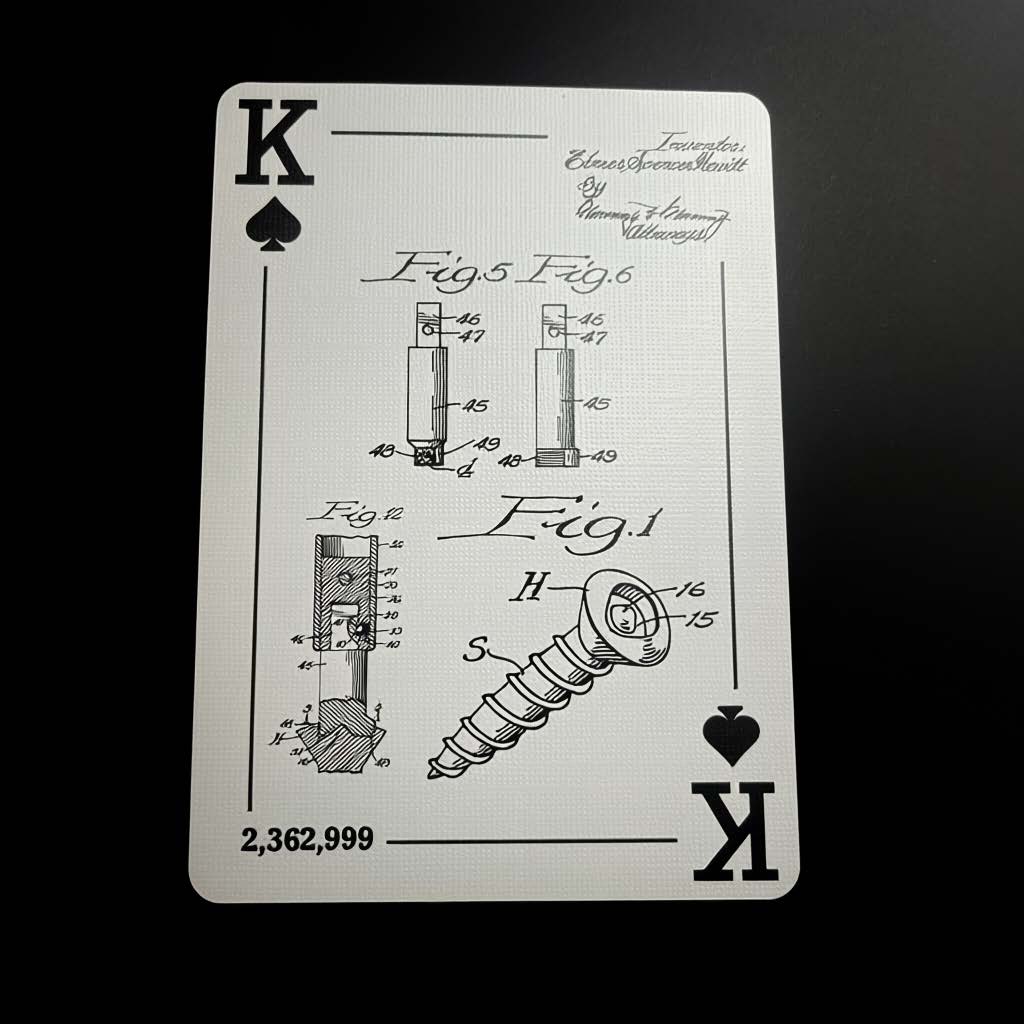
Fasteners are everywhere. They’re in the chair you’re sitting on, the phone in your hand, the bridges you drive across, the rockets we launch, and the machines that build everything else. They’re the universal joining mechanism — the tiny, standardized, endlessly reliable pieces that make complex systems possible. A single bolt doesn’t look like much, but multiply it by the thousands used in a skyscraper or the millions used in a car, and you start to see why fasteners are the true kings of engineering. They bring order, repeatability, and serviceability to designs that would otherwise fall apart, literally and figuratively.
What makes fasteners so powerful is their combination of simplicity and versatility. A screw converts rotational force into clamping power. A bolt and nut create a joint that can be tightened, loosened, inspected, replaced, or upgraded. It’s no exaggeration to say that modern engineering would collapse without them.
Most people are surprised to learn that bolts don’t actually “hold things together” by brute strength — they work because tightening them stretches the bolt like a spring, creating a powerful clamp that squeezes the parts so hard that friction, not the bolt itself, carries the load. In a properly designed joint, the bolt isn’t taking shear at all; the clamped surfaces are locked together so tightly they can’t slip. That’s why high‑strength fasteners like Grade 8 bolts are so effective: they can be stretched to a much higher tension without yielding, generating enormous clamping force. Even though this is the fundamental physics behind almost every engineered bolted joint, it’s the opposite of what most people imagine — they picture the bolt shank acting like a pin, when in reality the bolt’s real job is to act like a spring that keeps the joint squeezed together under massive pressure.
This is why it's so important to torque bolts to the proper specifications. Too much torque and you'll cause plastic deformation - significantly reducing your clamping force. Too little and you won't have enough friction to keep the parts conjoined. Next time you stumble across a tensioned bolt, look at the torque stripes - these are lines added to the top of the bolt and to the surface they're clamping to after tightening. If they're misaligned - the bolt is backing out or deforming. It needs to be replaced.
As a real‑world example, think about a truck‑mounted aerial lift — the bucket trucks used for electrical work, tree trimming, and window cleaning. These machines are assembled with a mix of heavy welds and high‑strength Grade 8 bolts, and operators are supposed to check the torque stripes every single day before use. The constant vibration from the truck’s chassis can cause a bolt to lose preload if it isn’t properly tensioned, and once that clamp force drops, the joint can slip, fatigue, or fail catastrophically. As a transportation engineer, I've witnessed this exact scenario before.
Without properly designed and tensioned bolts, even the most advanced welds, castings, and components would shift, loosen, or tear themselves apart under real‑world loads. In every industry from aerospace to construction, reliable fasteners are what turn individual parts into functional, safe, and durable engineering. This is why I chose fasteners as the Kings of The Engineers Deck - there is simply nothing more vital.
KboxCo Playing Cards
Questions? Concerns? Reach us at kboxcalendars@gmail.com
© 2026. All rights reserved.